







- Hide-a-bed
- Mattresses
- Bed Bases
- Headboards
- Bedding
- Pillows
- Fabrics
- Lighting
- Hot Sleepers
How to Choose the Right Pillow — A Sleep Position Guide
A pillow is easy to underestimate. It's often the last thing people think about when setting up a bed — and yet it's in direct contact with your head and neck for seven or eight hours every night. The wrong pillow causes neck tension, poor sleep quality and morning headaches. The right one keeps your spine aligned, your body relaxed and your sleep uninterrupted.
The good news: choosing the right pillow is straightforward once you know the two things that matter most — your sleep position and your temperature preference.
Side sleepers
Side sleeping is the most common position in New Zealand, and it's generally considered one of the better options for spine health — provided your pillow is the right height.
When you lie on your side, there's a gap between your ear and the mattress. Your pillow needs to fill that gap so your head stays level with your spine. If the pillow is too flat, your head drops toward the mattress and your neck bends downward. If it's too thick, your head is pushed up and your neck bends the other way. Neither is comfortable for long.
Side sleepers need a firmer, higher-loft pillow — one that holds its shape through the night rather than compressing under the weight of your head. Look for pillow fills that maintain their loft: down alternatives, latex or denser synthetic fills tend to perform better than soft, low-fill down options that flatten easily.
Back sleepers
Back sleeping needs less loft than side sleeping. Your head should rest at a height that maintains the natural curve of the neck — not pushed too far forward by a thick pillow, and not dropping back on a flat one.
A medium-height pillow with a moderate feel works best. Avoid very high or very firm pillows, which tilt the chin toward the chest and create tension through the upper spine. Memory foam or latex options that conform to the curve of the neck can work well for back sleepers.
Stomach sleepers
Stomach sleeping is the hardest position on the neck and spine — the head is rotated to one side for hours, which creates sustained strain on the cervical vertebrae. If you can't change the habit, the best mitigation is to use as little pillow height as possible.
Stomach sleepers need a very low, soft pillow — ideally one that compresses almost flat under the weight of the head. Some stomach sleepers find no pillow under the head more comfortable, though a thin pillow under the stomach or hips can help keep the lower spine from arching.
Hot sleepers
Temperature is the other major variable in pillow choice, and it's underrated. If you regularly wake up warm or find yourself flipping the pillow to the cooler side, your pillow fill is likely trapping heat.
Traditional down and some synthetic fills can retain warmth. Latex breathes better than most foam options. For a more direct solution, Mazon's cooling pillows use phase-change materials designed to regulate temperature through the night — drawing heat away from the head rather than absorbing it.
Fill types at a glance
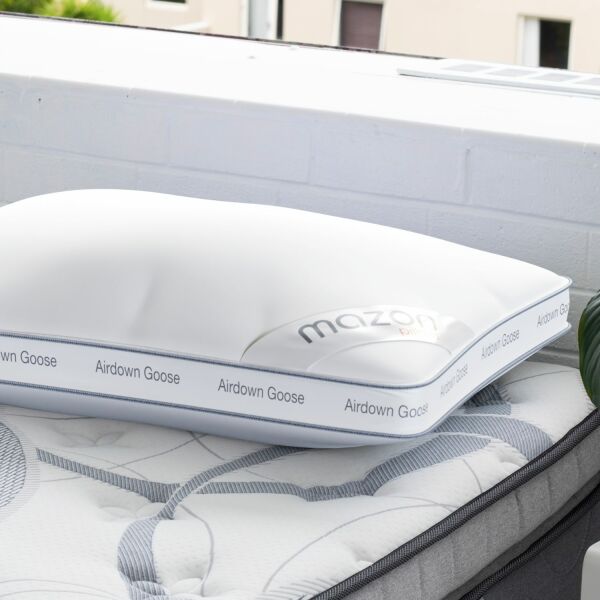
Down and airdown — soft, lightweight and natural. Good temperature regulation for most sleepers. Mazon's Airdown Goose Pillow combines the lightness of down with the resilience of a supportive fill. Suits back sleepers and lighter side sleepers who prefer a soft feel.
Synthetic fill — more affordable, hypoallergenic and machine washable. Firmness and loft vary by product. A good entry-level option.
Latex — responsive and durable. Doesn't compress over time the way down and synthetic fills can. Naturally hypoallergenic and resistant to dust mites. Suits side and back sleepers who want consistent support.
Cooling and phase-change fills — designed to regulate temperature rather than insulate. Best for hot sleepers regardless of position.
How many pillows do you need?
One well-chosen pillow is almost always better than two stacked. Two pillows push the head too far forward for most sleepers. If you find yourself stacking, it's usually a sign your single pillow is too flat — time to replace it or switch to a higher-loft option.
When to replace your pillow
Most pillows should be replaced every one to two years, though higher-quality fills can last longer with proper care. The fold test: fold the pillow in half and let go. A good pillow springs back to its full shape. One that stays folded has lost its resilience and won't support you properly.
Pair your pillow with a pillow protector to keep it clean and extend its life between replacements. Browse the full Mazon pillow range in-store or online.